


Press Gallery
A dedicated space for the press to observe and report on parliament.
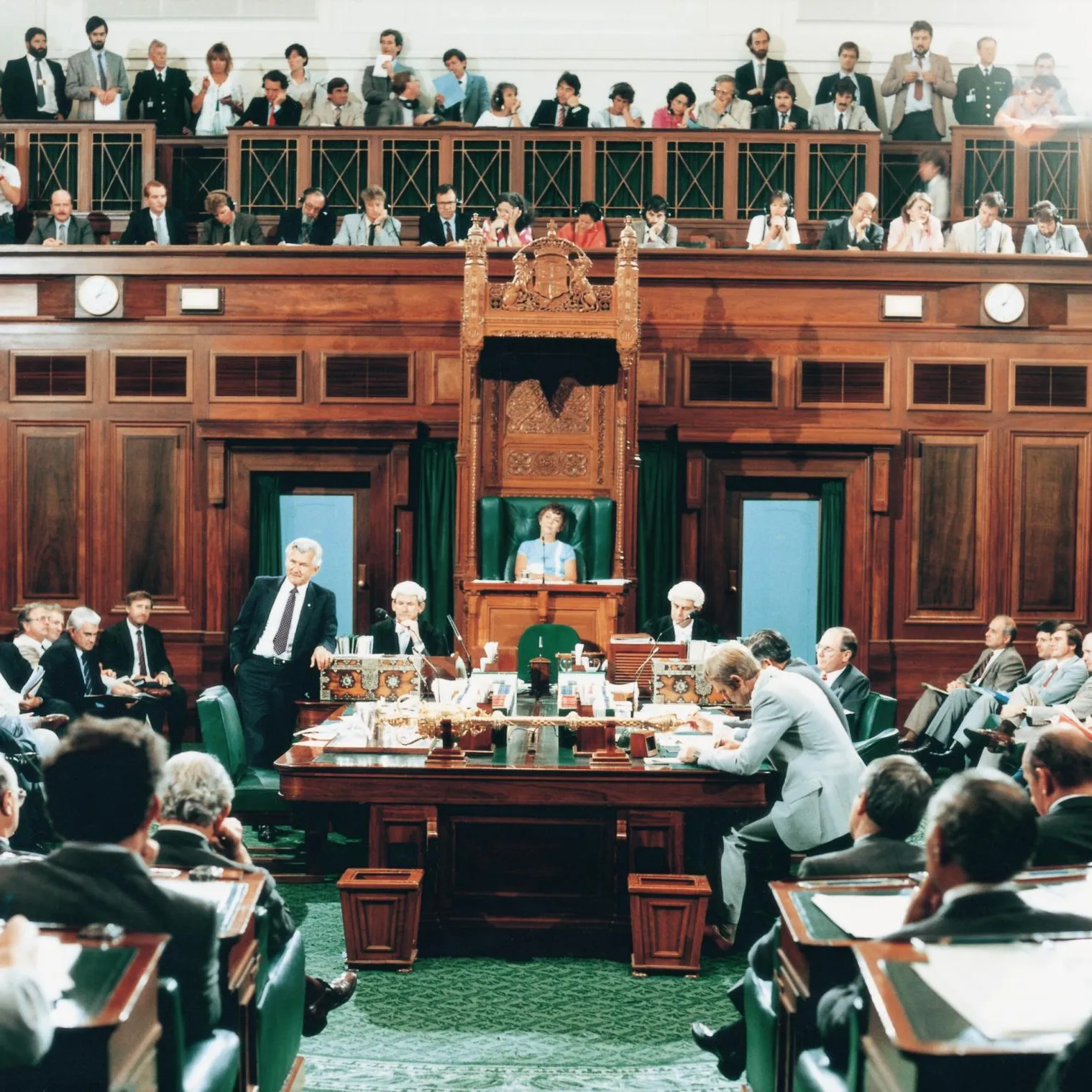
When architect John Smith Murdoch designed Parliament House, he included space on the upper floor for the Federal Parliamentary Press Gallery. The name Press Gallery refers to both the office space and viewing galleries, and the group of journalists, photographers, camera operators, editors and administrative staff who worked there.
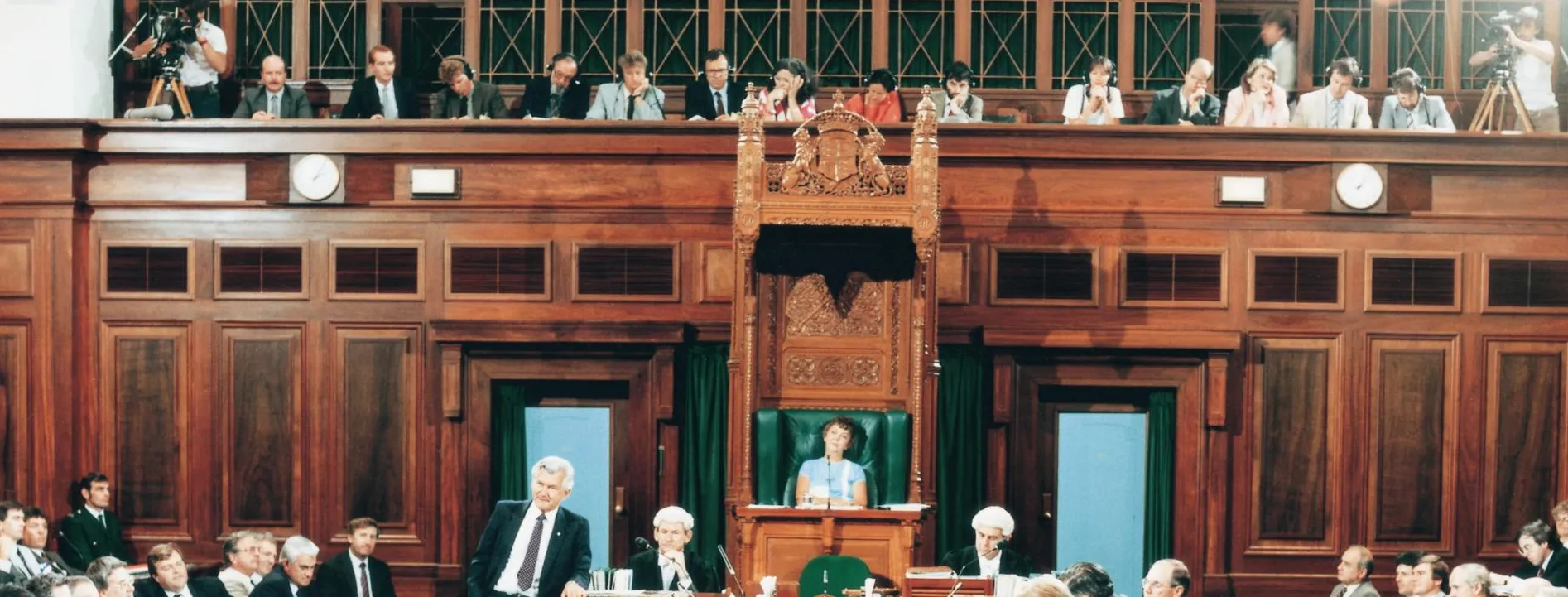
The space allocated to the press included galleries above the House of Representatives and Senate chambers, offices, and eventually a rooftop catwalk between the two chambers. In the galleries above the chambers, the press had unrestricted access to observe and report on the daily goings-on of the parliament and government.
- Journalist Peter Bowers, 1988
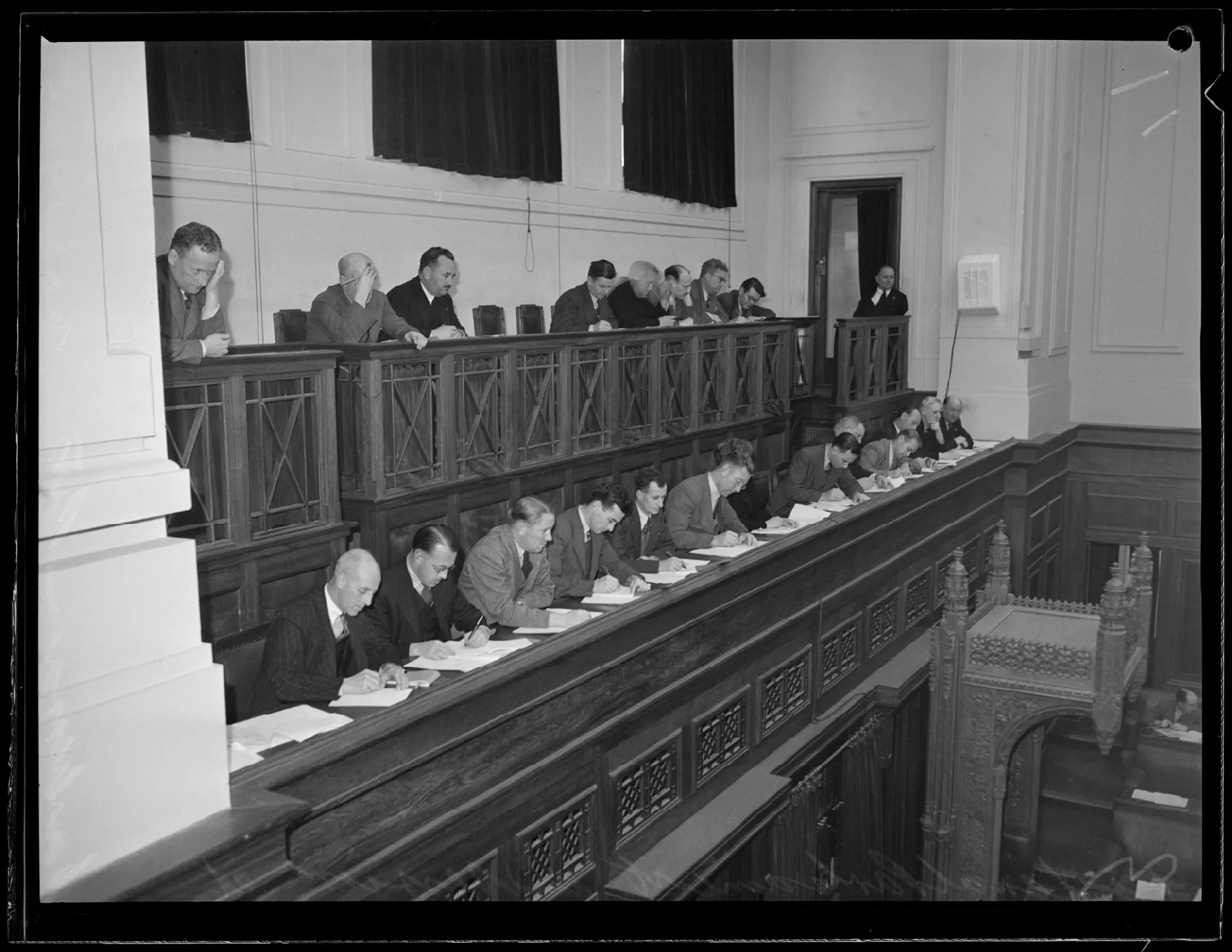
Members of the Press Gallery at work in the gallery above the House of Representatives chamber, November 1945.
Photograph courtesy State Library of New South Wales
How was the Press Gallery designed?
The design of the Press Gallery was influenced by the UK Parliament and Melbourne's Parliament House. Initially there were 12 offices: nine for newspapers and three for press agencies, plus galleries above each chamber with space for 48 journalists in total – 24 in each chamber.
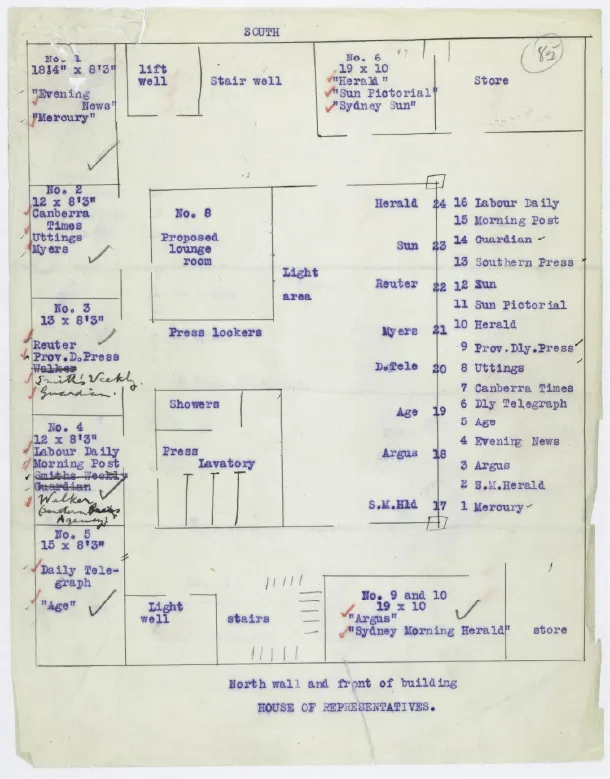
Office and gallery seating plan for the House of Representatives Press Gallery showing the first 24 desks, 1927.
Courtesy NAA: A7877, 1982/220
Positioned in the elevated galleries above the chambers, journalists took notes, then returned to their desks to work on stories which they sent to their bureau's head office by telegram, teleprinter or telephone.

The Senate Chamber at Old Parliament House.

The House of Representatives Chamber at Old Parliament House.
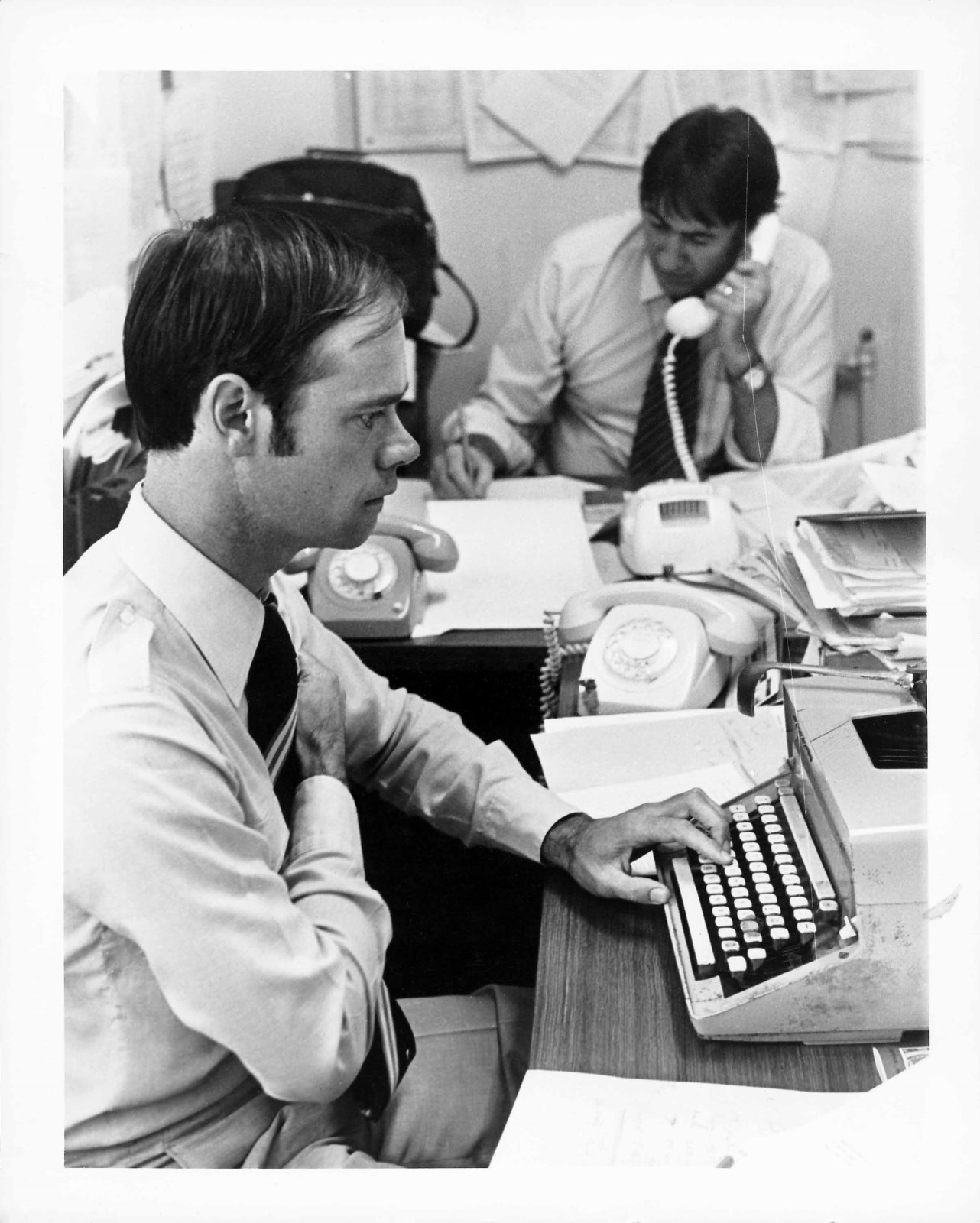
Warwick Costin working on a Remington typewriter in his Press Gallery office, about 1970s.
Photograph Museum of Australian Democracy Collection
What features did the Press Gallery have?
Press boxes
During the Second World War, press statements became more common, and staff working for the prime minister, government ministers, the opposition leader and other departments delivered statements to the Press Gallery via press boxes. If it was an important news item, staffers rang a bell, and journalists raced to their box hoping to be first to report the breaking news in the press statement.
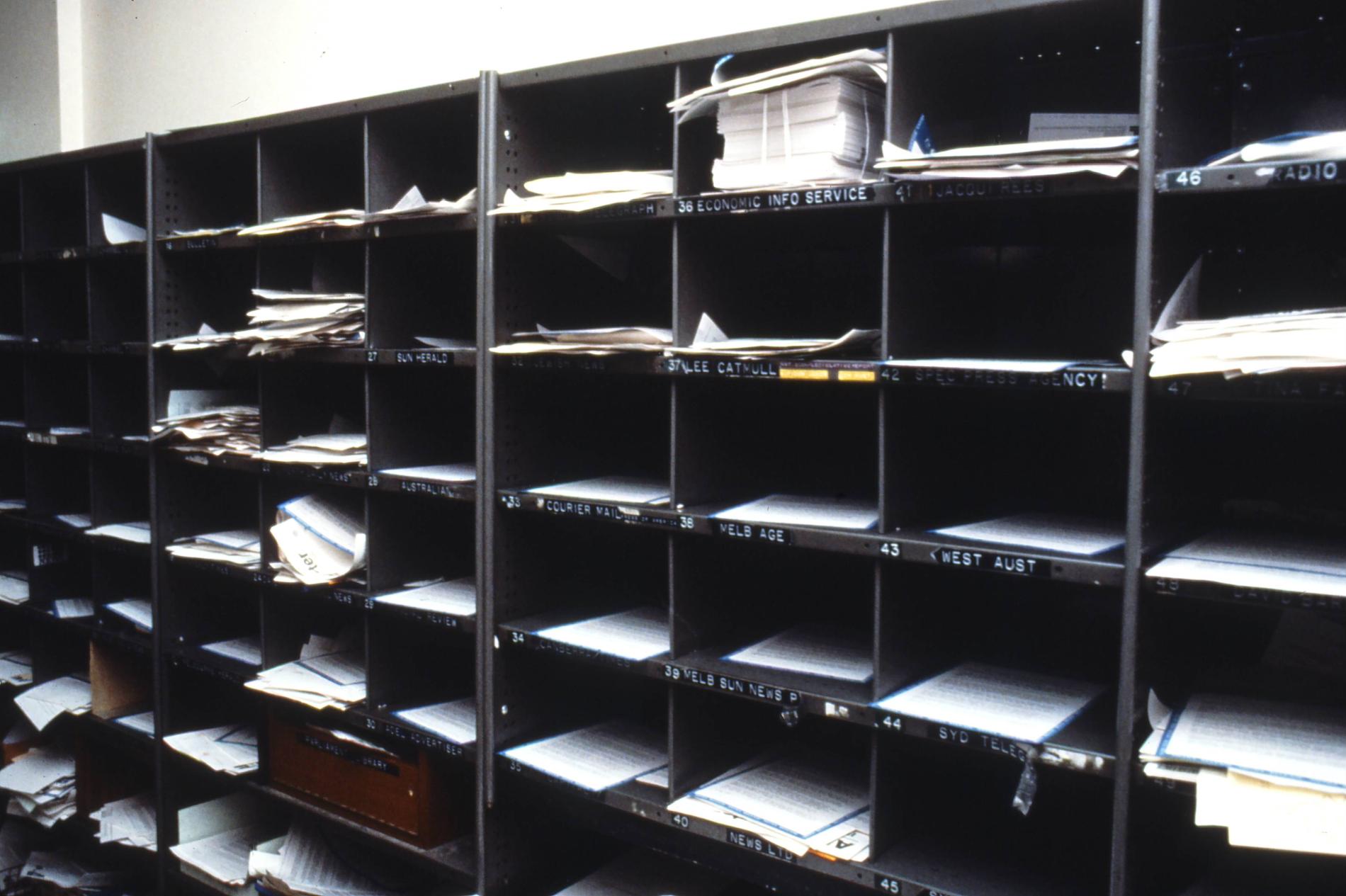
Lamson tubes
A Lamson tube communication system was installed throughout the building during construction. The Press Gallery used these pneumatic tubes to send 'carriers' containing telegrams and copy to the General Post Office in East Block – now the National Archives of Australia – via the Parliament House Post Office. By the 1980s the system was no longer in use, but you can see evidence of it in The Press Gallery exhibition today.
Location of the Press Gallery
The Press Gallery's location at the top of the building meant the offices were stifling in summer. When television was introduced, journalists and crew worked under hot lights in hot studios. And if being hot wasn't enough, the roof frequently leaked. The leaky roof and story leaks from around the building became an in-joke among staffers.
However, the location benefitted from a rooftop catwalk that served as a direct and rapid path between the chambers when anything newsworthy was happening.
Another advantage of the location was the easy access to politicians and sources. If a Press Gallery journalist needed a quote, they could usually find a source quickly. This also worked the other way around. As treasurer, Paul Keating was well known for heading up to the Press Gallery to find out how the press was reporting on his economic policy.
Lack of space in the Press Gallery
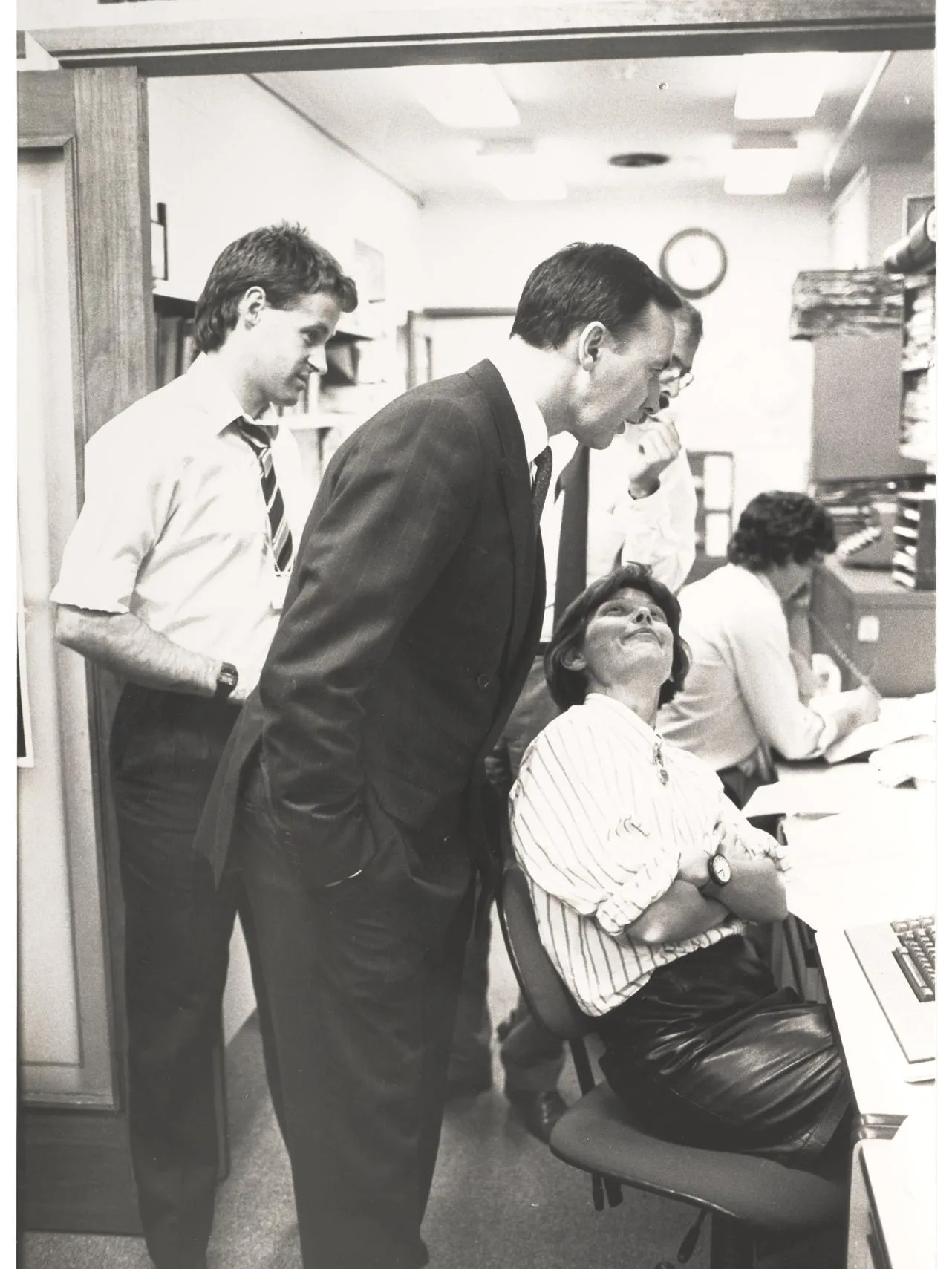
The original design of the Press Gallery didn't allow for increasing numbers of journalists and support staff. When Parliament House opened in 1927, about 30 journalists worked in the Press Gallery. By 1988, the numbers were around 250. The offices were incredibly cramped and despite the removal of walls and numerous extensions, it still wasn't enough – everyone had to adapt and work with the space they had.
Peter Harvey presented the Channel Nine news broadcast from the same desk he worked at, sweeping papers out of the camera's view when he was on air. In an NMA oral history in 1994, Harvey said, 'The desk where I worked was in fact a studio set and whenever we had to do an interview or whatever, everybody had to get up, walk out and sit in the corridor so that we could actually use it as a television studio and when that was all over, back we trooped.'
Three journalists worked in the Australian Radio News office, which doubled as a studio – they could type then present their stories without getting up from their chair.
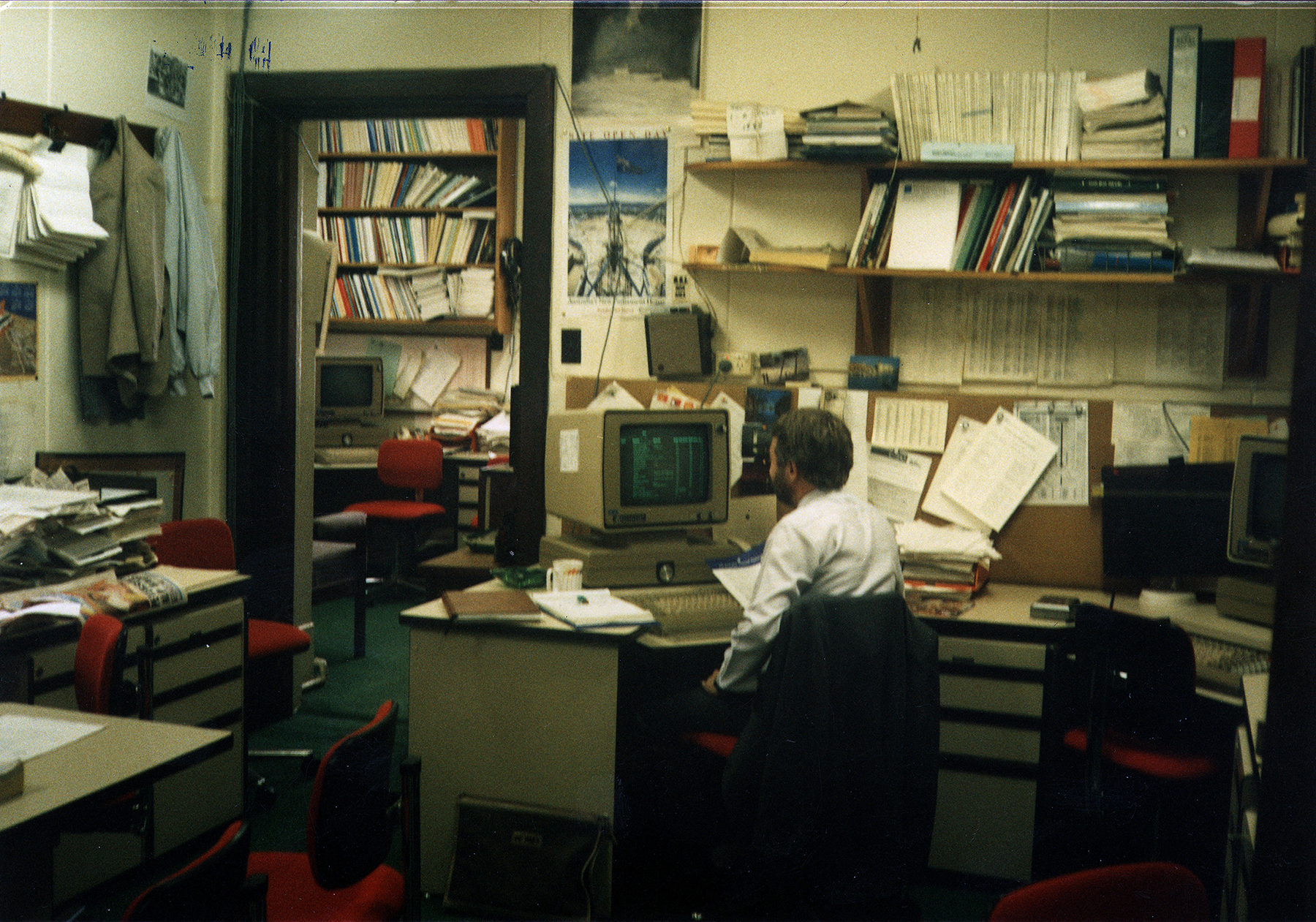
Wes Wallace of Australian Associated Press at his desk in the Press Gallery, about 1980s.
Photograph courtesy Pat Rawlings, Museum of Australian Democracy Collection
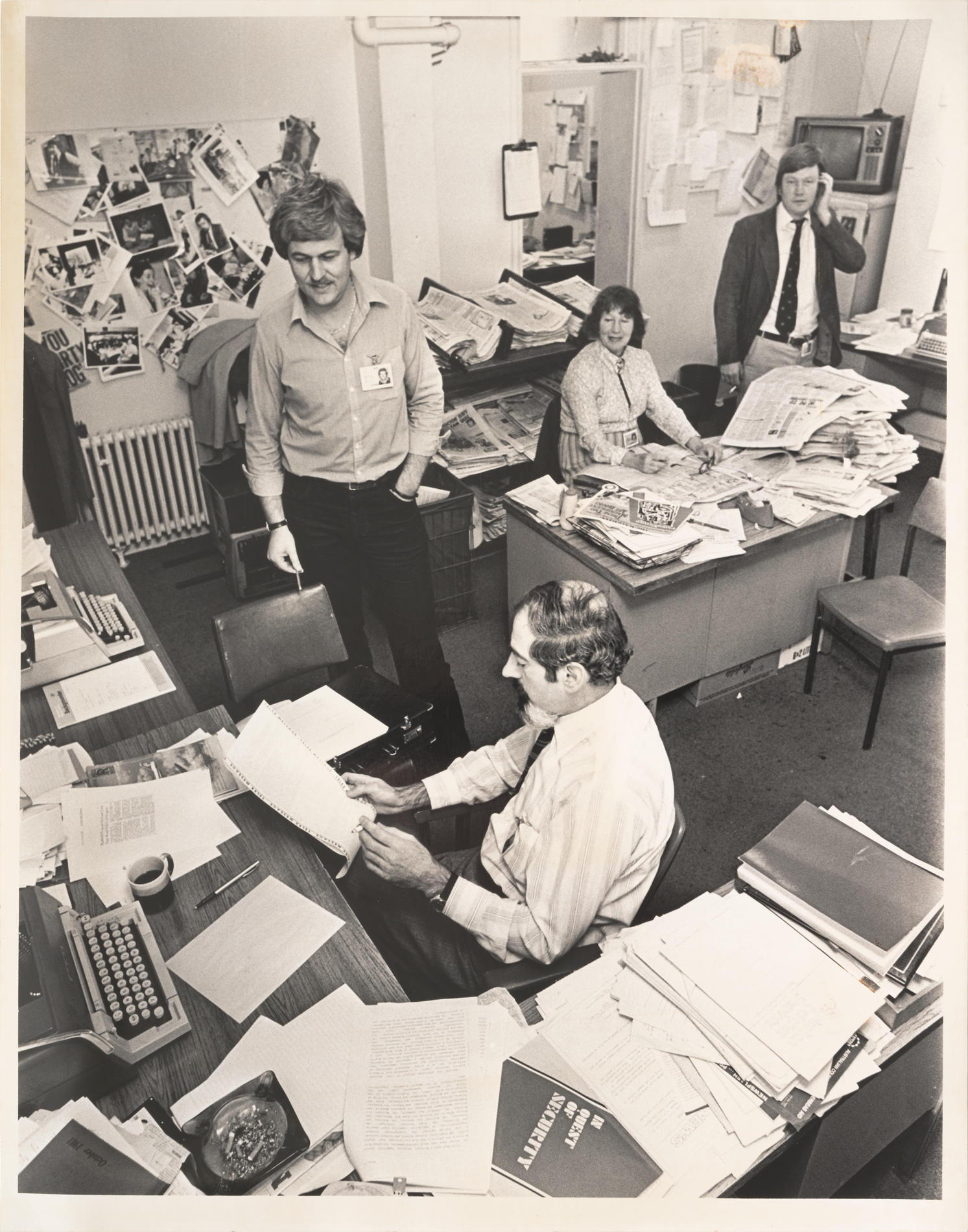
Press Gallery journalists at work in the now-demolished Press Gallery offices.
Photograph Graeme 'Bluey' Thomson photographic collection, photographer unknown
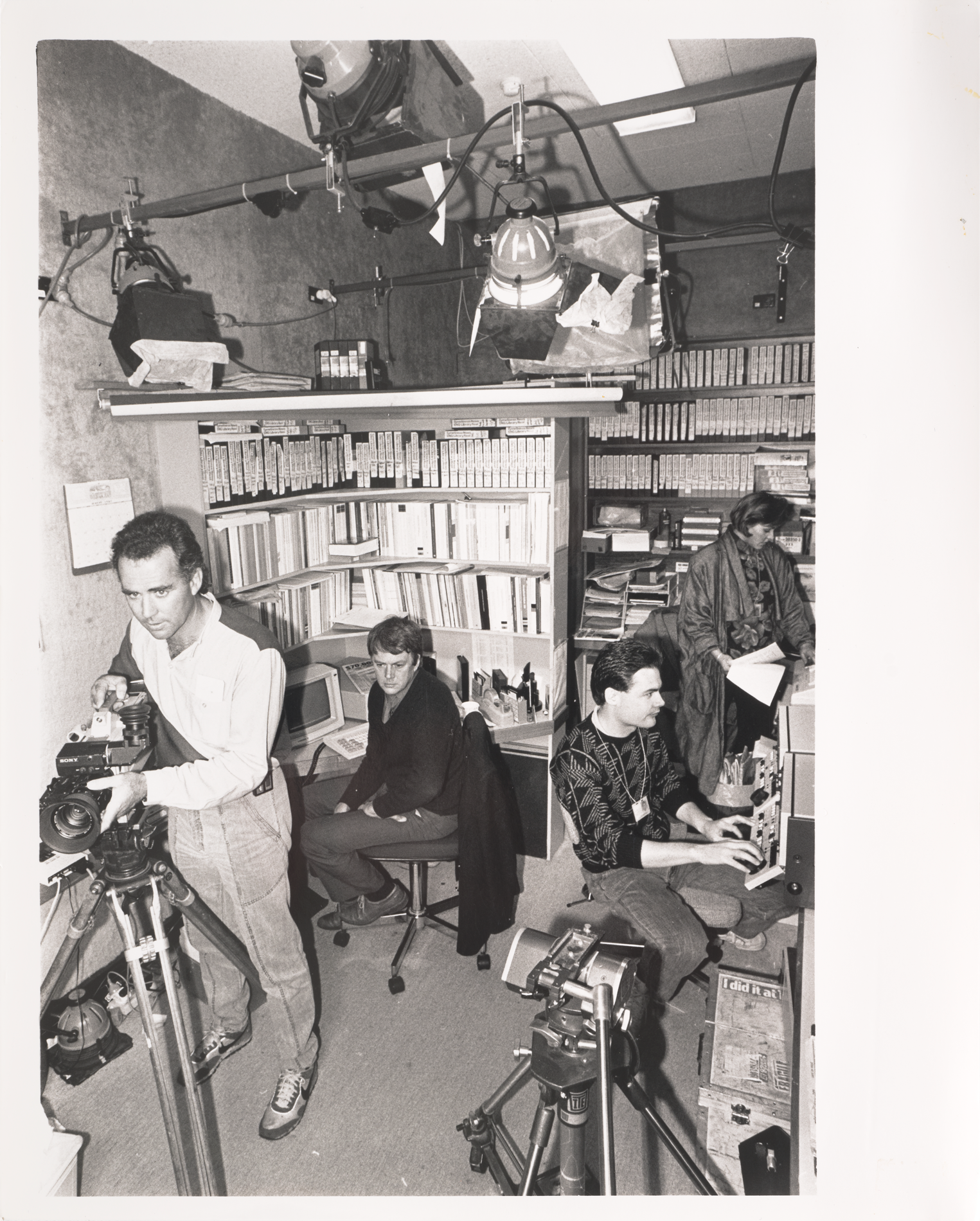
A cramped television studio in the Press Gallery, about 1980s.
Photograph Graeme 'Bluey' Thomson photographic collection, photographer unknown
Desks and inkwells in the chambers
When the building opened in 1927, holes were drilled into the desks in the galleries to hold inkwells to hold ink for refillable fountain pens. When these inkwells were no longer used, journalists crammed rubbish into the cavities. Some journalists etched their names and thoughts onto the desk surfaces. Occasionally they had a nap – if their snoring was too loud, someone from the chamber would be sent up to the gallery to wake them.
Narrow stairs in the chamber galleries
The chamber galleries were precarious. It is reported that journalist Reg Leonard was working late in the House of Representatives chamber in 1950 and fell asleep. When the sitting ended, everyone left and the lights were turned off. When Reg woke up, it was pitch-black and he was disorientated. He fell over the edge of the gallery, falling six metres to the floor of the chamber. According to the story, he just missed being impaled on a pointed decorative corner on the top of the Speaker's chair and walked away uninjured.
Who worked in the Press Gallery?
Journalists, photographers, camera operators, editors, teleprinter operators, and administrative staff worked in the Press Gallery. The journalists described themselves as the 'eyes and ears of the people'.
Two early notable names in the Press Gallery were ABC news correspondent, Warren Denning, and The Herald (Melbourne) correspondent, Joe Alexander. They were key to establishing the profile and prestige of the Press Gallery.
Denning covered the opening of Parliament House in 1927 and joined the Press Gallery in 1928. In 1939, he was appointed the ABC's first political correspondent, setting up the Canberra bureau. He was the Press Gallery's first radio correspondent.
Alexander came to Canberra in 1929 and was known to influence as well as report on politics. When James Scullin lost the 1931 election to the United Australia Party led by Joseph (Joe) Lyons, Alexander reportedly wrote in his diary, 'Everyone is saying that I have put Lyons in as prime minister. It is more than half true.'
Denning and Alexander's impact and legacy were lasting, including supporting and nurturing younger journalists. Alan Reid arrived in Canberra in 1937 as a Sydney Sun reporter and was mentored by Denning. Reid went on to cover 15 prime ministers over his 48 years in the Press Gallery and worked across press and television. Reid is considered the most influential political journalist of his time.
Other notable names include Laurie Oakes, Barrie Cassidy, Niki Savva, Peter Harvey, Peter Bowers, Gay Davidson, Heather Ewart, Kate Legge, Michelle Grattan AO, Anne Summers AO, Paul Malone, Wallace Brown, Laura Tingle, and Mungo MacCallum.
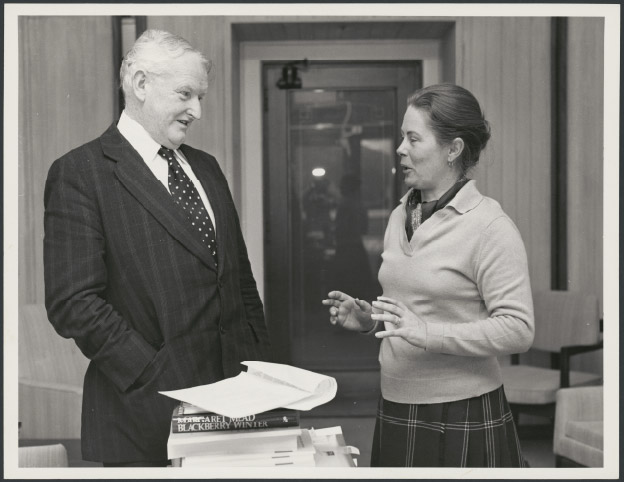
The Canberra Times bureau chief, Gay Davidson, interviews Deputy Prime Minister Frank Crean in his office, 1975.
Photographer Ian Mitchell, courtesy National Library of Australia
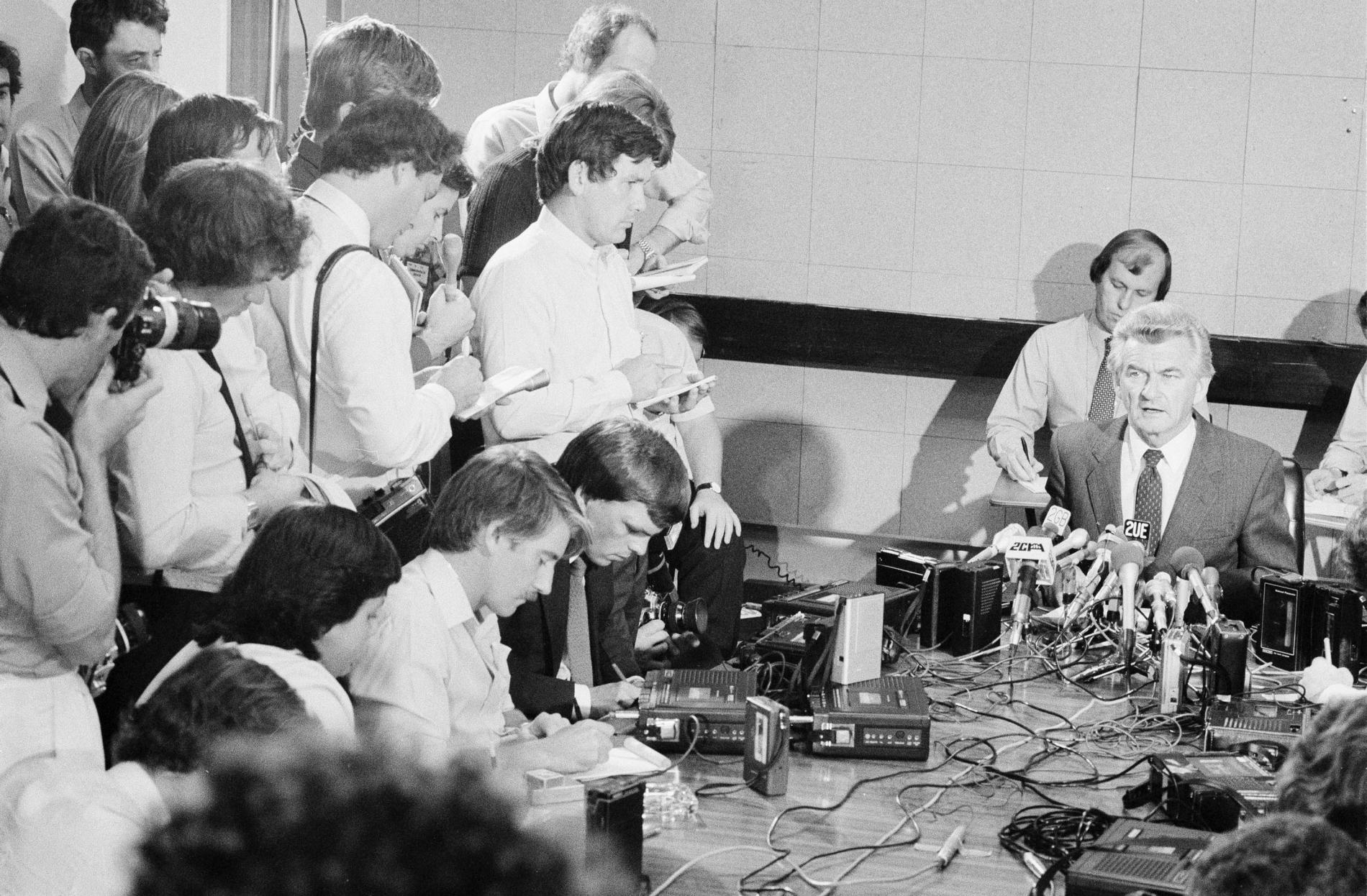
Prime Minister Bob Hawke holds a press conference, 1983.
Photograph courtesy NAA: A6180, 11/3/83/24
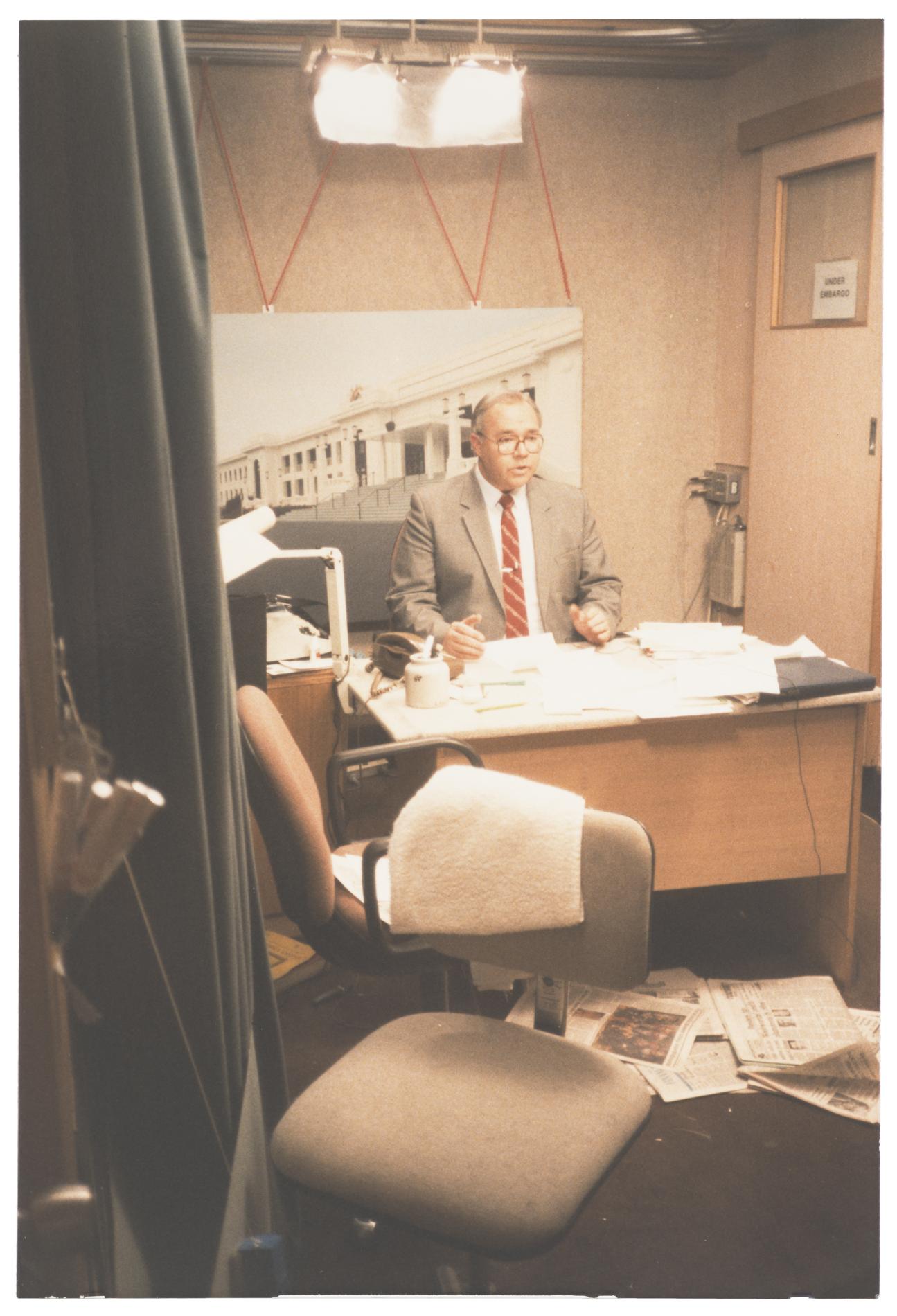
Laurie Oakes presents to camera in the Channel 9 studio, about 1984-1988.
Photograph Museum of Australian Democracy Collection, donated by Laurie Oakes
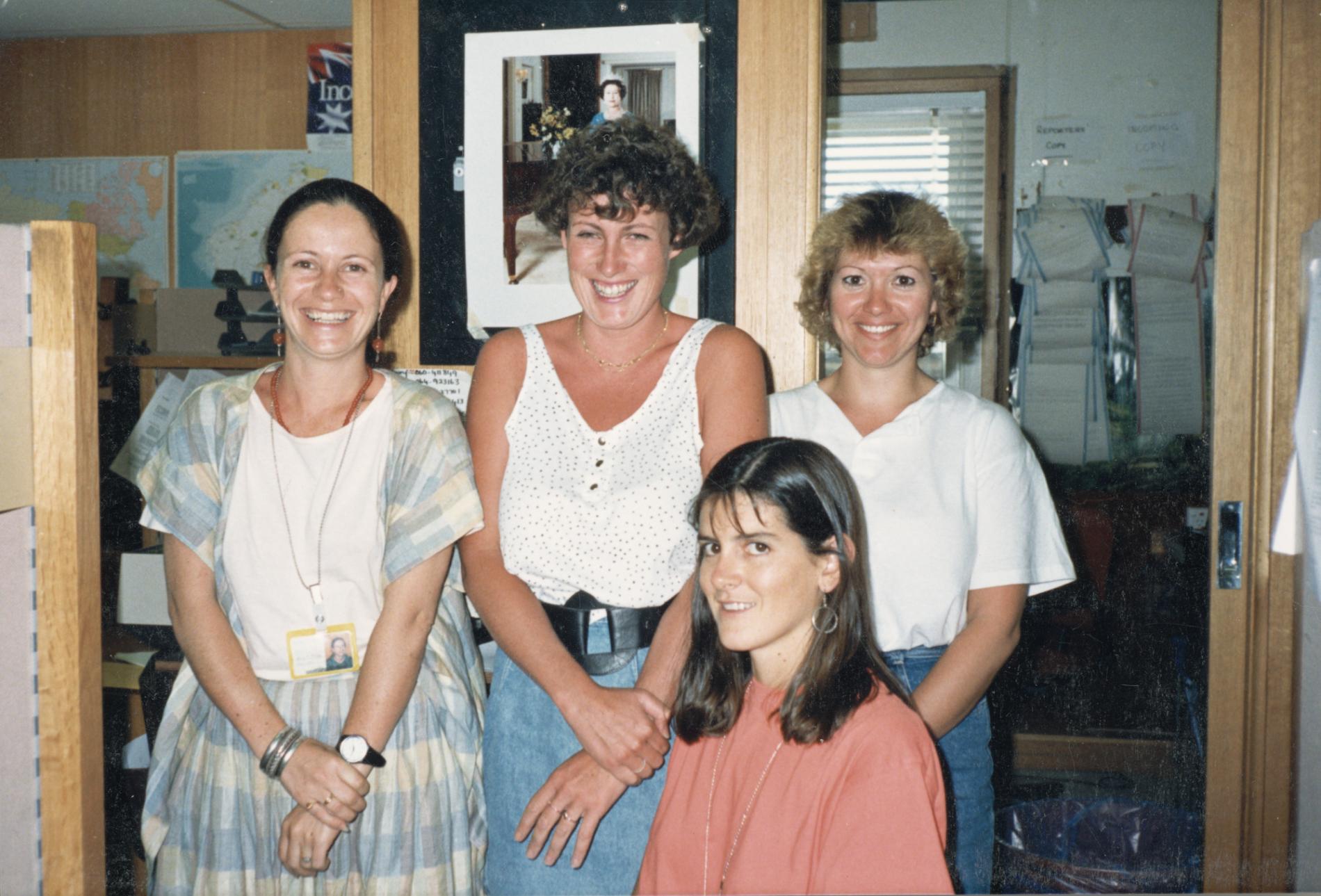
(L–R) Anne McCaig, Heather Ewart, Sharon O’Neill and an ABC staff member in front of the ABC bureau teleprinter room, April 1988.
Photograph Museum of Australian Democracy Collection, courtesy Heather Ewart
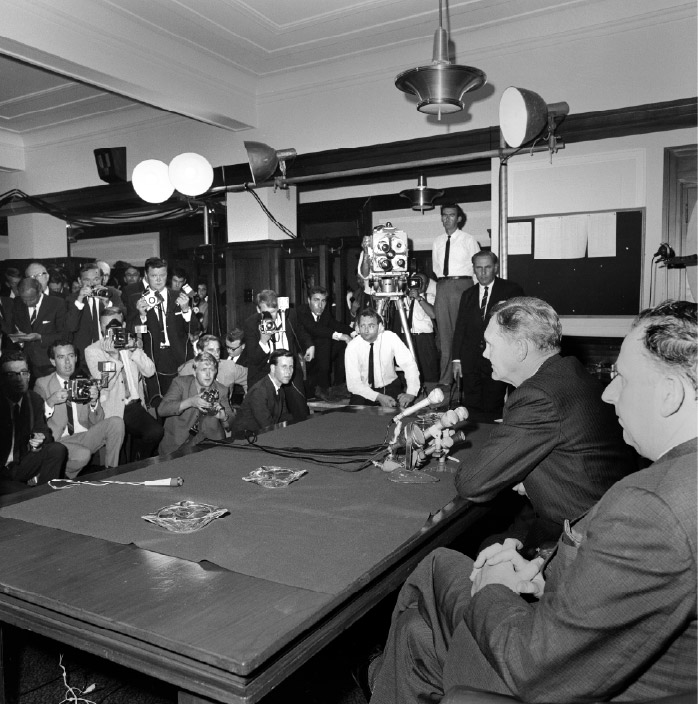
John Gorton addresses the press in the Senate Opposition Party Room, 1968.
Photograph courtesy National Archives of Australia, A1200, L68174
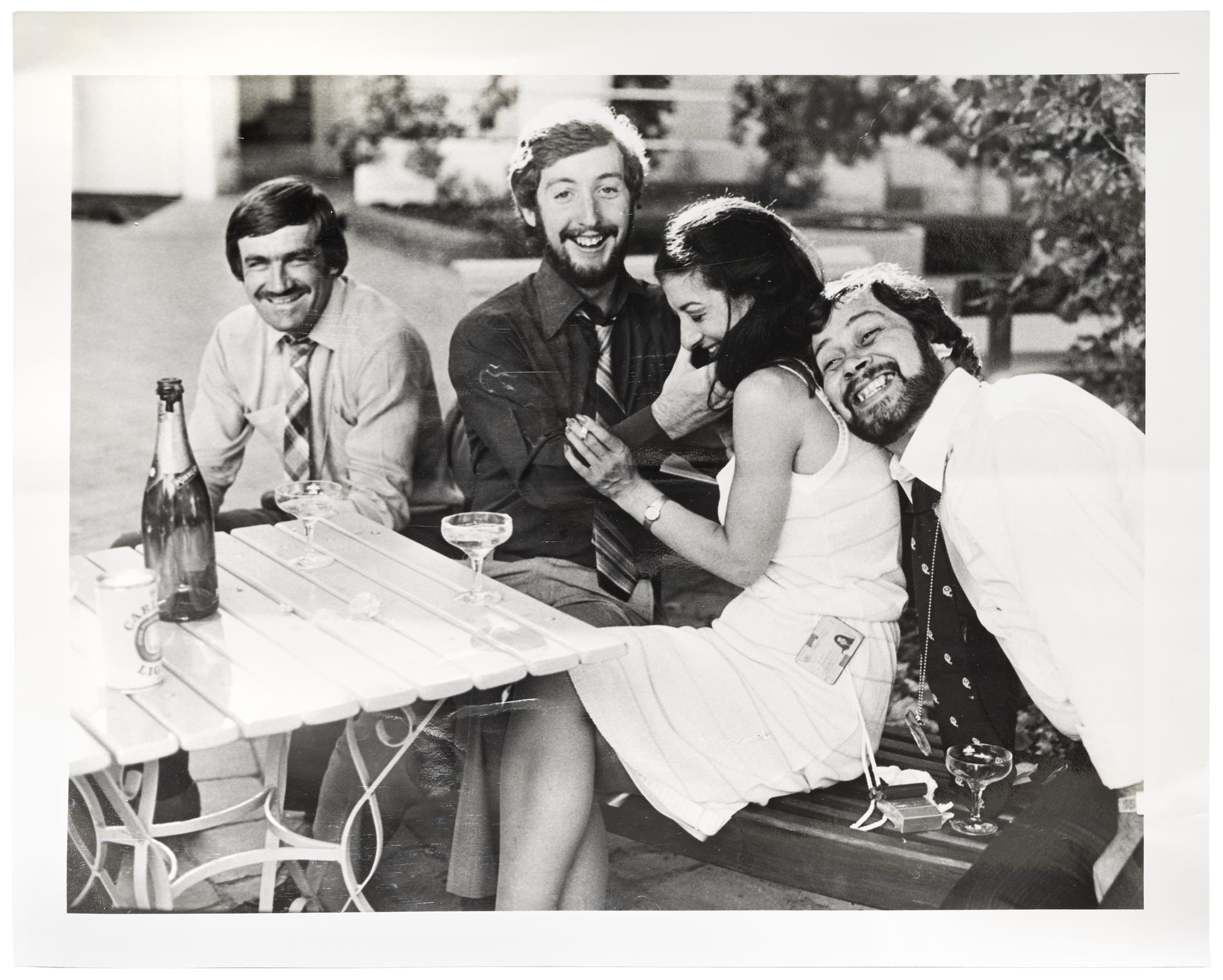
Barrie Cassidy, Patrick Lyons, Niki Savva and Trevor Hawkins in the House of Representatives courtyard outside the Non-Members' Bar, 1981.
Photograph courtesy Niki Savva
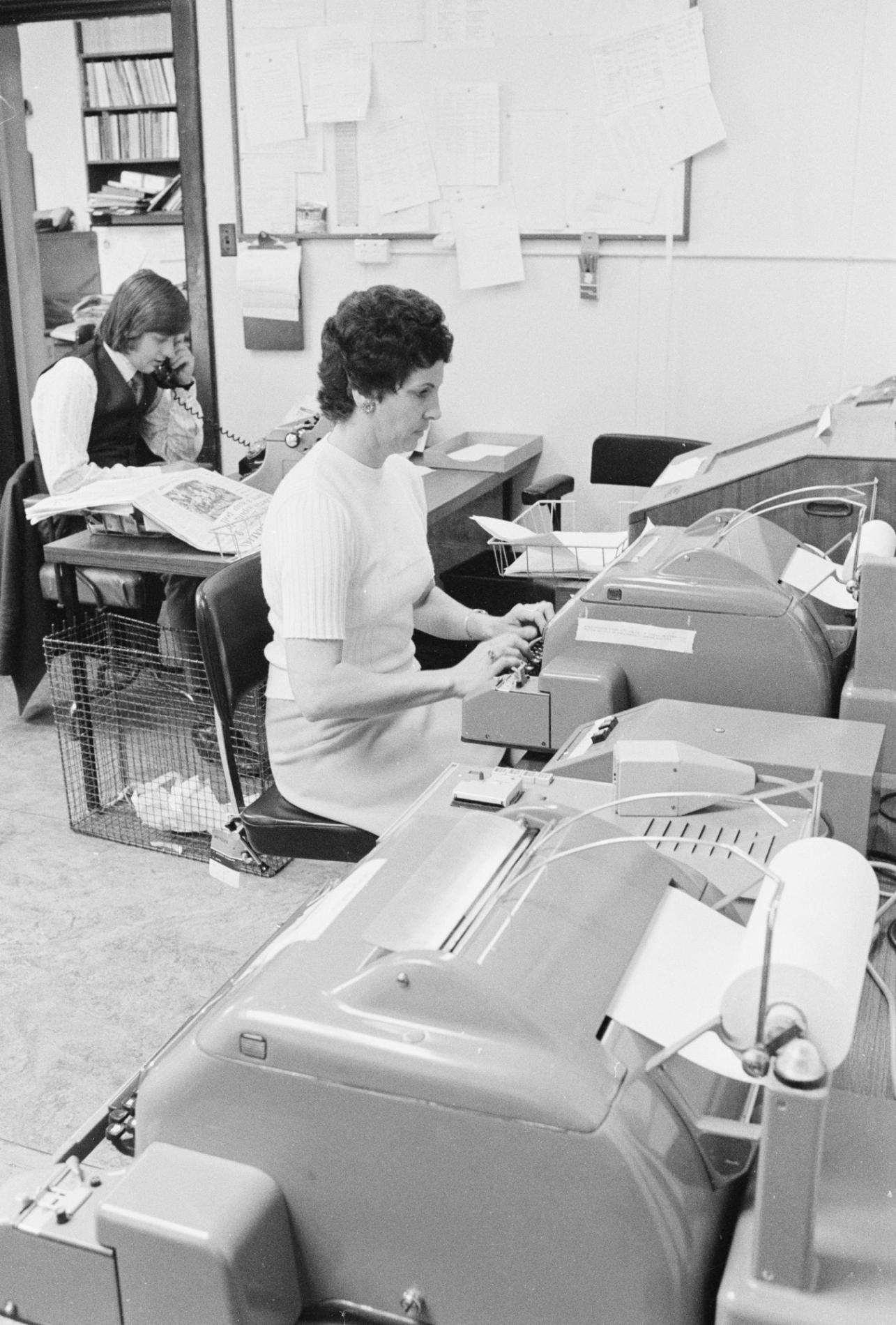
A teleprinter operator in one of the Press Gallery offices, 1973.
Photograph courtesy NAA: A7971, CT13/4
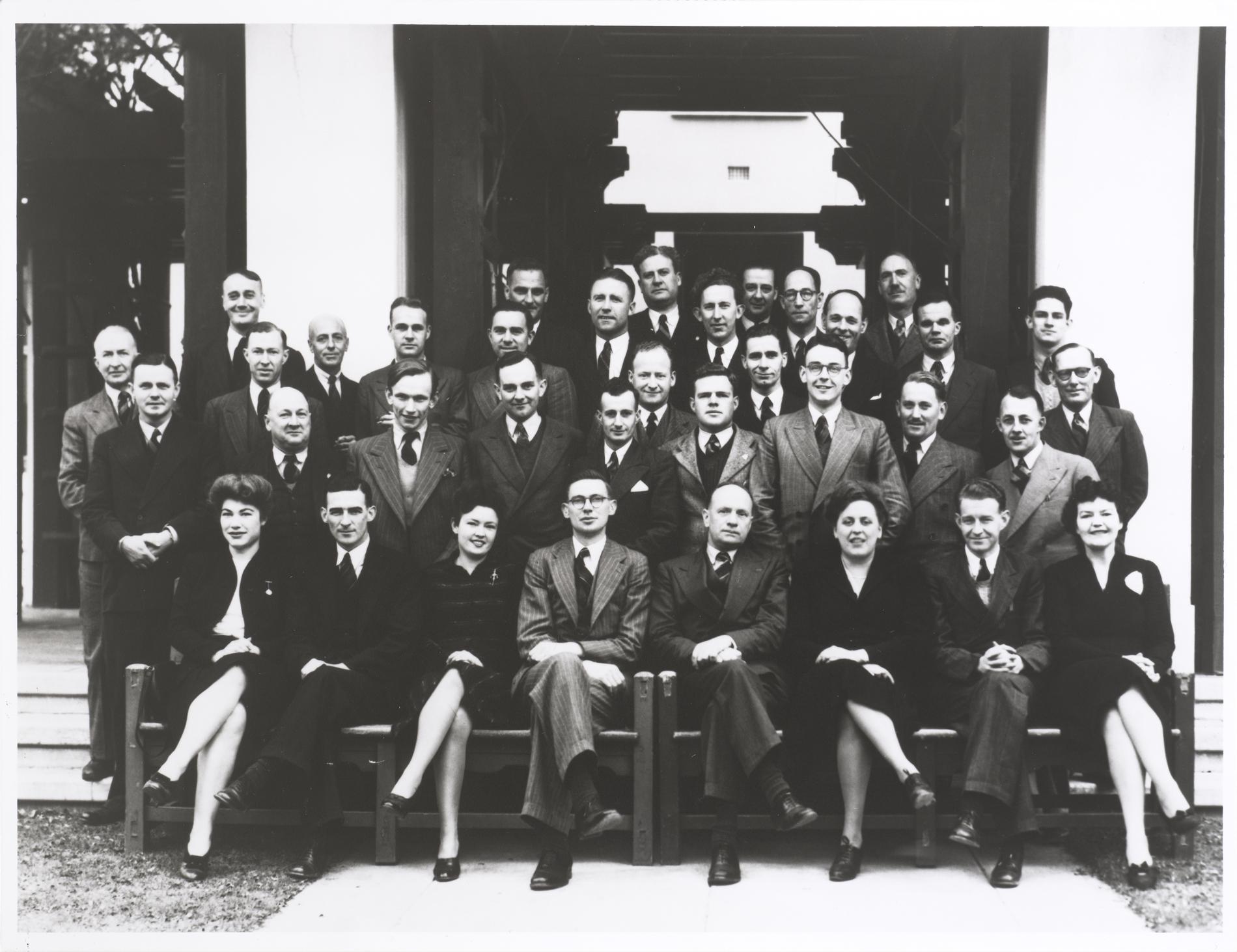
The Press Gallery poses for a group shot in a courtyard, 1945.
Photograph courtesy Federal Parliamentary Press Gallery
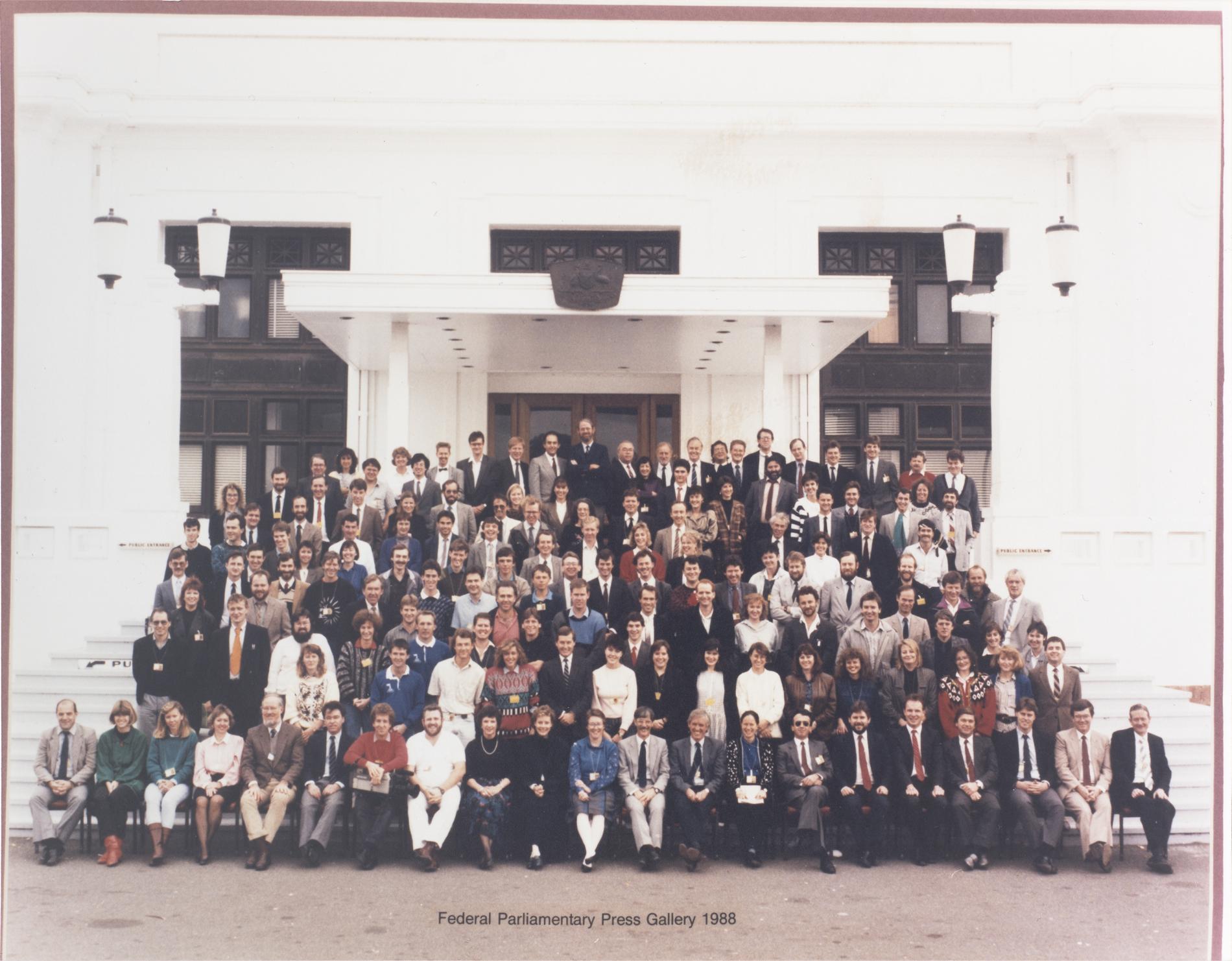
The Press Gallery on the steps of Parliament House, 1988.
Photographer unknown
What key events occurred in the Press Gallery?
The Second World War
Despite censorship being introduced at the start of the Second World War, the Press Gallery was trusted by Prime Minister John Curtin. Curtin gave secret press briefings to keep journalists onside, and to allow them to pass information to the newspaper proprietors. Between 1942 and 1945 senior journalists were invited to the secret briefings up to twice a day and there were no significant leaks.
On 8 May 1945, in the first live radio broadcast from parliament, acting Prime Minister Ben Chifley announced the end of the Second World War in Europe. This paved the way for the ABC to begin regular radio broadcasts from parliament the following year.
Introduction of television
When television arrived in Australia in 1956 it changed how Australians consumed news. Until then, print and radio were the main sources of news.
Sydney station ATN7 was the first to telecast directly from Parliament House, broadcasting a ball in 1958 in honour of HRH The Queen Mother. Television was used for campaigning and to announce the results for the 1958 federal election.
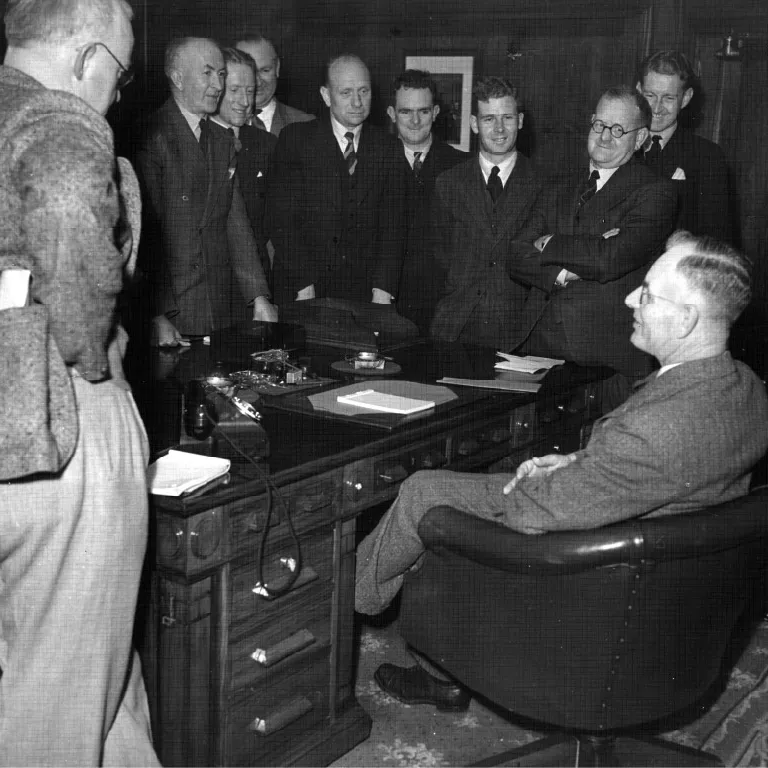
The first political press conference to be telecast live in Australia was the announcement by Prime Minister Robert Menzies of his retirement in January 1966.
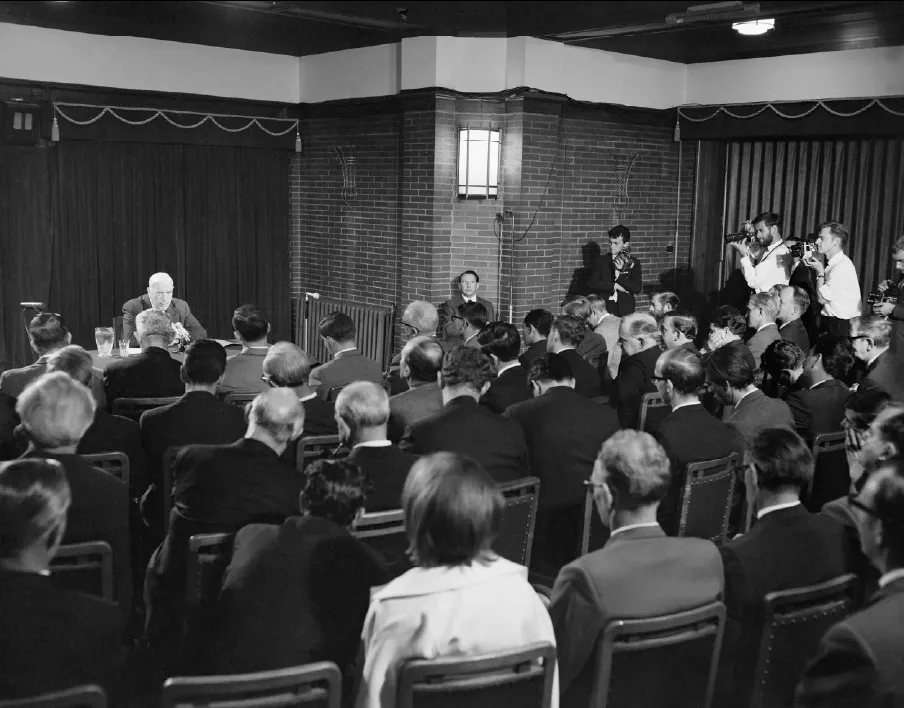
Prime Minister Robert Menzies' final press conference in the Members' Dining Room, 20 January 1966.
Photograph courtesy NAA: A1200, L53531
Regular television broadcasting of parliamentary proceedings, including the ever-popular Question Time, began in the 1990s in Australian Parliament House and continues today.
Women in the Press Gallery
Small numbers of women journalists worked in the Press Gallery from the early 1940s, however it wasn't until the 1970s that the number of women changed significantly. In the early 1970s, The Canberra Times' Gay Davidson became the Press Gallery's first woman bureau chief for a metropolitan paper and the first woman president of the Federal Parliamentary Press Gallery. By 1988 there were nearly 40 women working across newspaper, radio and television.
The 1975 dismissal
The Labor Party led by Gough Whitlam swept to victory in the 1972 federal election after 23 years of Liberal-Country Party coalition government. Three years later, when Whitlam's Labor government was dismissed by Governor-General Sir John Kerr, the Press Gallery were on the front steps of Parliament House capturing the action as it unfolded.
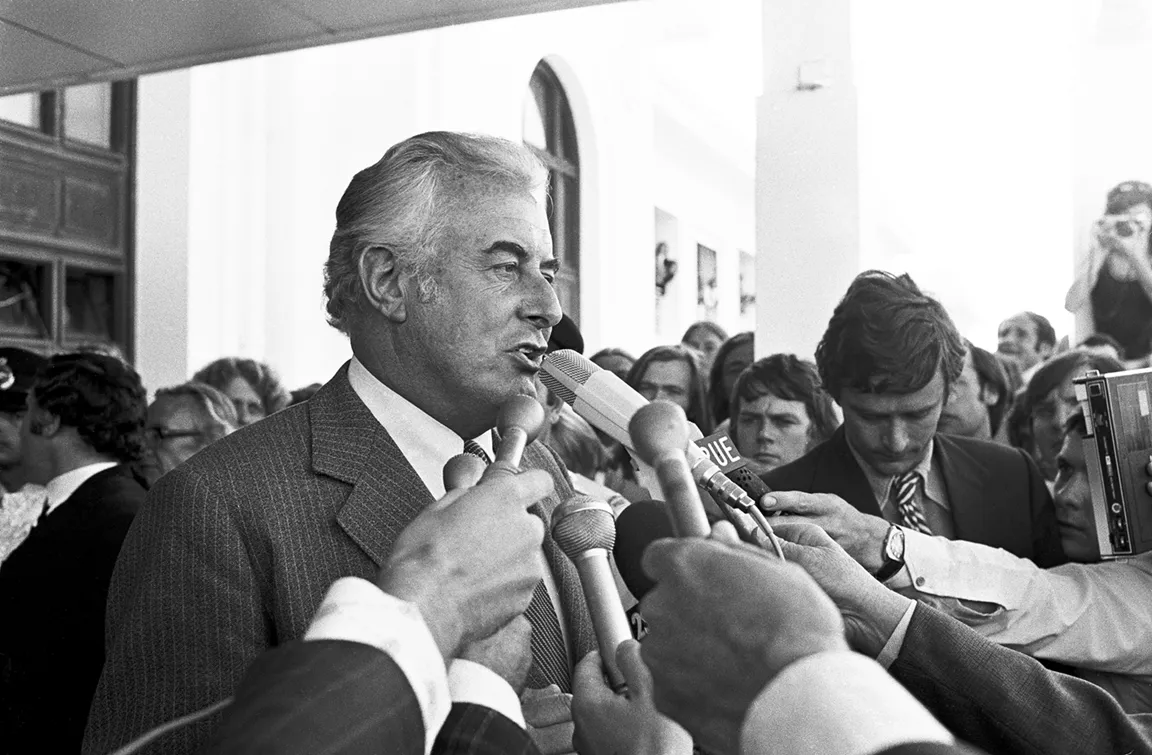
Gough Whitlam speaking outside Parliament House after the dismissal, 1975. Photograph NAA: A6180, 13/11/75/34
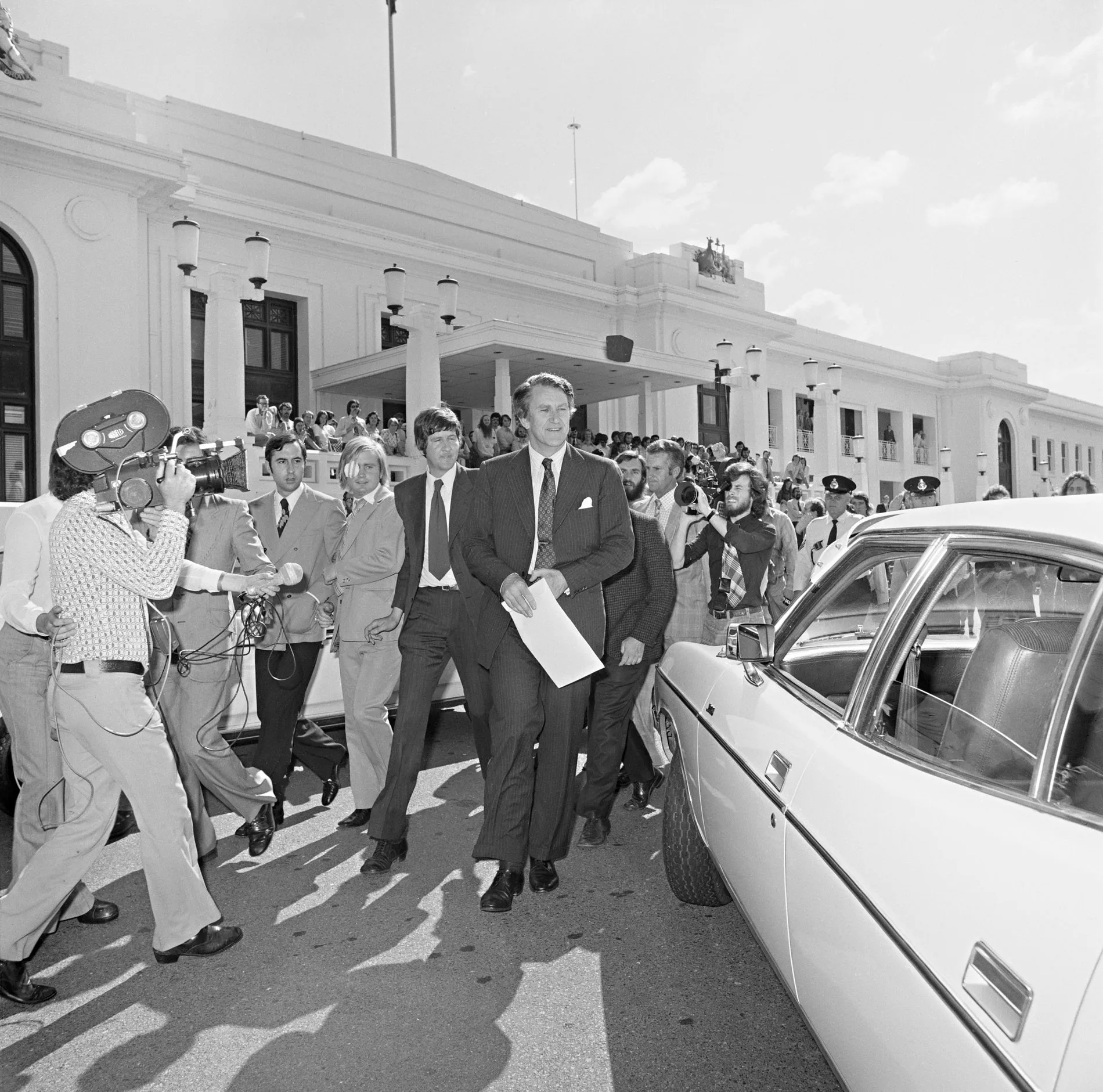
Malcolm Fraser leaving Parliament House after the dissolution of parliament, 11 November 1975. Photograph NAA: A6180, 13/11/75/41
Can you visit the Press Gallery at Old Parliament House?
Yes, the House of Representatives Press Gallery is open to the public. The Senate Press Gallery is closed.
What is a teleprinter?
Before fax and email, the teleprinter was the most efficient way to send text around the country. Journalists typed up their stories and passed their copy to a teleprinter operator who would type the message into a teleprinter. The message was transmitted to a remote machine at bureau headquarters. The transmitted document was referred to as a 'telex', short for 'telegraph exchange'.
You may also be interested in...
Volunteer
Our volunteers are ambassadors for MoAD, sharing the stories of Old Parliament House.
APS Census
The APS Census reports reflect how staff feel about working at MoAD.
Getting here and parking
We are located inside Old Parliament House and you can get here by car, bus or bike.
Map
Use this page to find the locations of exhibitions, heritage spaces, the cafe and visitor facilities.
